
Proof or Regular Strike: Comparing Values of the Maria Tallchief Quarter
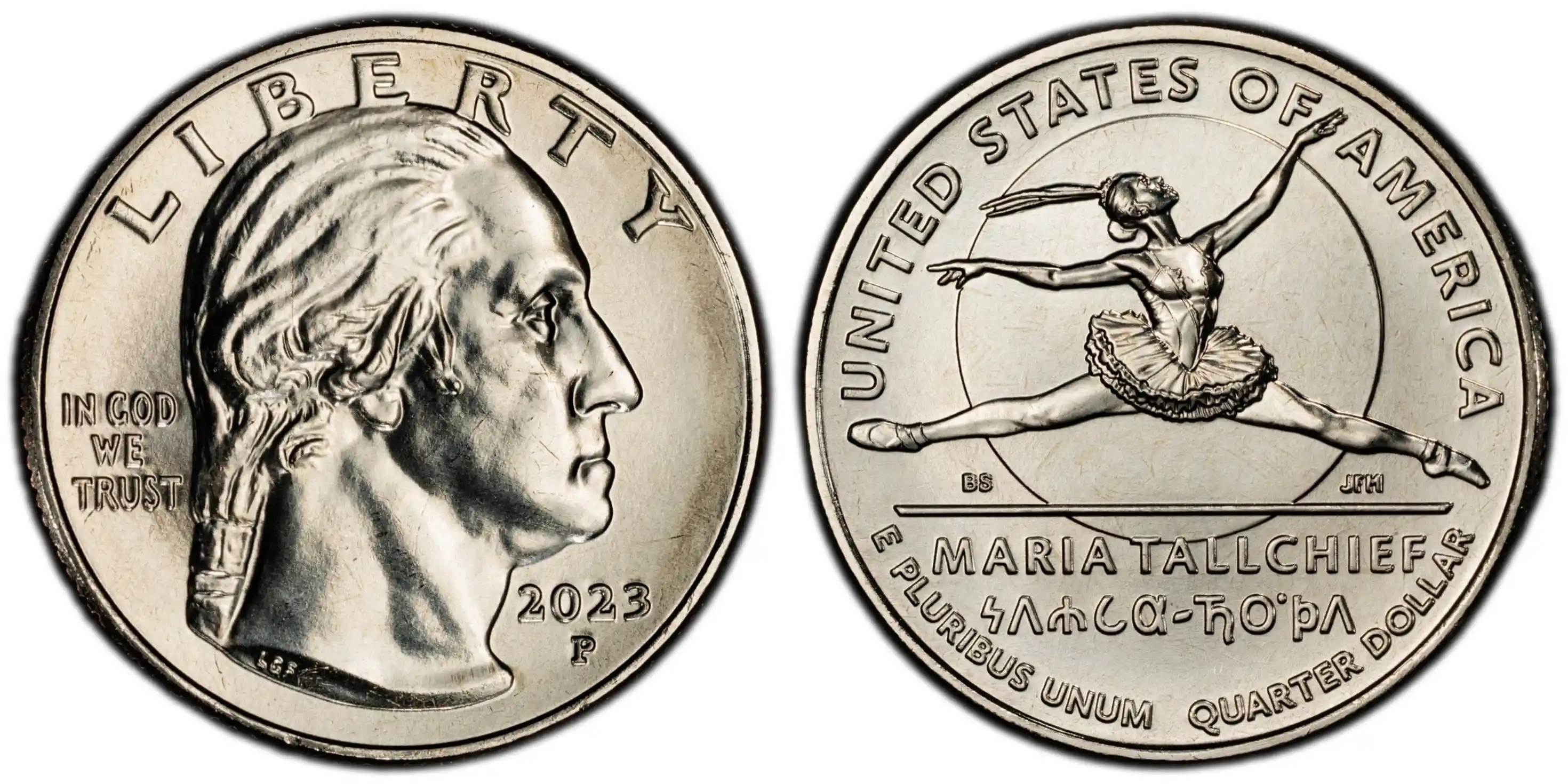
The Maria Tallchief quarter worth usually $0.25, but if you have a rare 99.9% silver issue or an In Cod We Trust error, the item is worth up to $100 and more.
Regular Strike Quarters
The mint builds regular strike quarters, also known as business strikes, specifically for public commerce. High-speed machinery punches out billions of these pieces, packs them into ballistic large-capacity bags, and ships them directly to commercial banking institutions.
Year | 2023 |
Diameter | 24.26 mm |
Weight | 5.67 g |
Composition | Copper/Nickel |
Philadelphia and Denver High-Volume Mintages
The vast majority of Maria Tallchief's quarters come from the two primary manufacturing hubs in Pennsylvania and Colorado.
P Philadelphia Mintage – over 185 million pieces
D Denver Mintage – over 184 million pieces
Because these production numbers remain vast, any copy you pull from active circulation holds a baseline value of exactly twenty-five cents. The rough mechanical process of bulk shipping introduces numerous:
Surface scratches
Bag marks
Edge scuffs
San Francisco Business Strike
The San Francisco Mint occupies a unique position in this modern program because it produced a small run of business-strike quarters.
The Distribution Plan – the United States Mint did not release the copper-nickel clad 2023-S business strike coins into public circulation boxes. Instead, they sold them directly to collectors in official three-roll sets and hundred-count canvas bags.
The Market Value – steady demand exists on the secondary market because this clad version has a very low mintage. Even in uncirculated condition, an individual 2023 S regular strike quarter is worth a few dollars for those who want to complete their annual sets without buying a full bank roll.
Item Value $3–$5
The Proof Market: Mirror Finishes and Low Mintages
The United States Mint uses an entirely different manufacturing protocol to create proof coins. Technicians hand-feed polished metal blanks into specialized presses.
The machinery slams down on each blank multiple times at a slow speed using hand-carved, polished steel dies. This process yields an extraordinary visual contrast: deep mirror-like background fields paired with frosted design details.
Standard Clad Proofs &. 99.9% Fine Silver Editions
The San Francisco facility struck two distinct proof versions of the Maria Tallchief quarter for annual holiday catalog sales.
The Standard Clad Proof – this coin utilizes the basic copper-nickel alloy blend. It mimics the weight and dimensions of regular pocket change but showcases a brilliant, flawless mirror surface.
The 99.9 % Fine Silver Proof – this edition contains zero copper or nickel filler. It weighs slightly more than a standard clad quarter and emits a bright white precious metal sheen. This version holds a dual layer of market security: its intrinsic bullion value tracks the live silver market, while its low production volume drives its numismatic collectibility.
Condition Demands for Proof Coins
The proof marketplace operates on a strict rule of perfection. Since these coins originate inside protective plastic packaging, collectors expect flawless surfaces.
The Grading Scale – professional coin authenticators grade these pieces on a proof scale from 60 to 70. A grade of PR-69 is common and holds minimal premium above the original issue cost.
The Registry Chase – if a Maria Tallchief proof achieves a perfect PR-70 Deep Cameo status from PCGS or NGC, its value climbs. Bidders on auction platforms compete for these pristine specimens to maximize their competitive online set rankings.
Condition Rarities: When Regular Strikes Eclipse Proof Values
A fascinating paradox exists inside modern American numismatics. Even though proof coins require far more effort to manufacture, a regular strike quarter from Philadelphia or Denver can easily outprice a proof coin if it achieves an ultra-high condition grade.
Registry Sets
When high-speed presses stamp out 185 million coins, the metal dies wear down rapidly. The coins clash against each other inside massive metal hoppers, which leaves thousands of microscopic dents on the surfaces. Finding a business strike that completely escapes this structural violence is incredibly difficult.
P/D MS-67 Quarter Value – $30–$50
MS-68 – $100–$200
Mint Mark & Type | Metal | Value |
P regular Strike | Copper-Nickel Clad | $0.25–$120+ |
D Regular Strike | Copper-Nickel Clad | $0.25–$250+ |
S Regular Strike | Copper-Nickel Clad | $3.00–$45+ |
S Clad Proof | Copper-Nickel Clad | $4.00–$25+ |
S Silver Proof | 99.9 % Silver | Precious Metal Value–$75+ |
Modern Errors to Watch For in Circulation
If you do not want to spend money on professional grading services, you can hunt for mechanical manufacturing slip-ups directly inside your daily issues. The high production speed of the regular strike coins caused several small errors to slip past the factory inspectors.
The In Cod We Trust Filled-Die Defect
This phenomenon generates extensive discussion across social networks and coin collecting message boards. During heavy production runs, heavy industrial grease and stray metal shavings accumulate inside the recessed cavities of the steel stamping die.
If this sludge clogs the specific cavity for the letter "G" in the official national motto, the metal cannot flow upward. The finished quarter leaves the press displaying a clear IN COD WE TRUST inscription.
Value $5–$20
The Broken Arm Die Crack & Shawl Chips
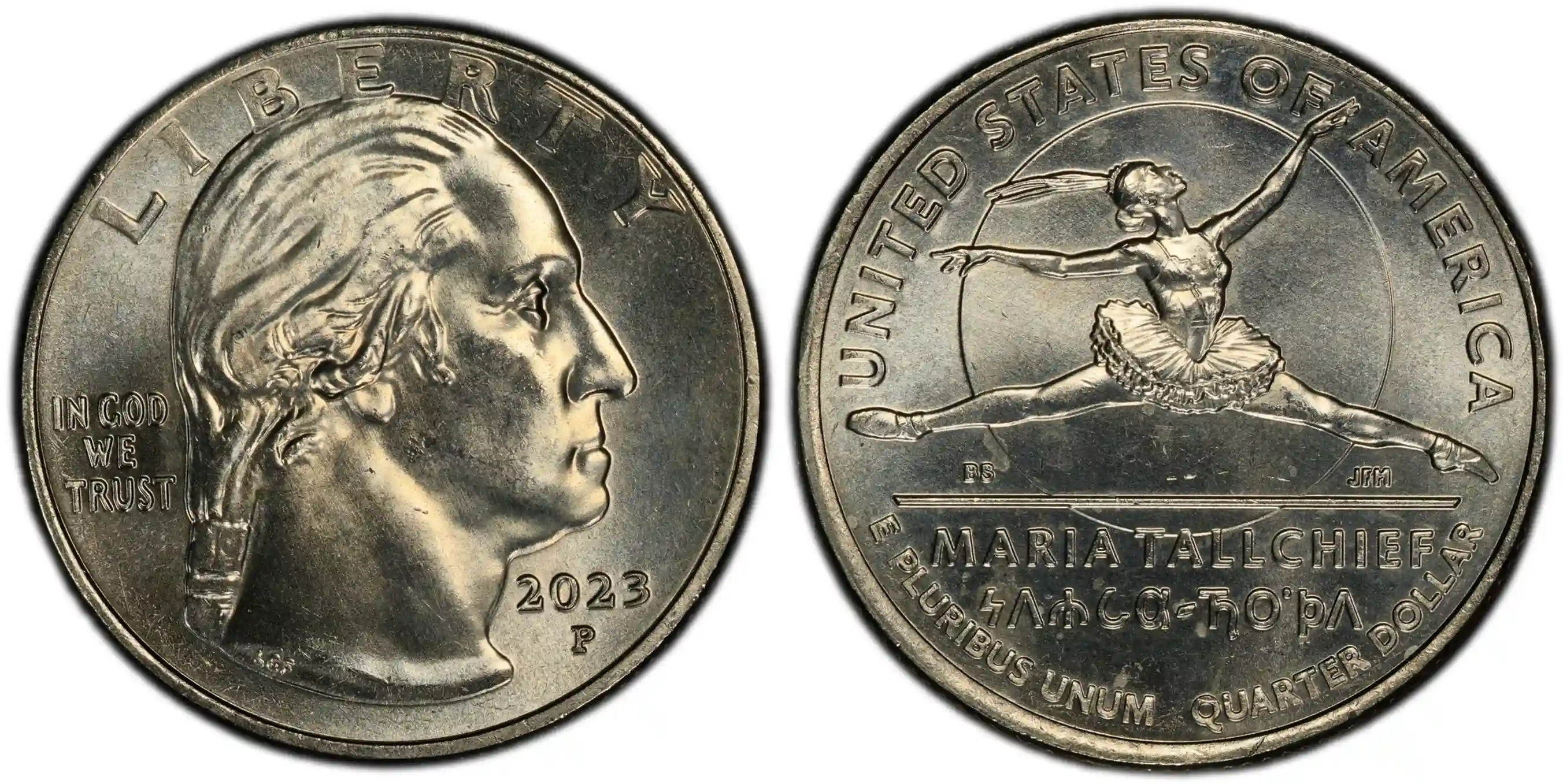
The artistic reverse side of the coin shows Maria Tallchief in a dynamic ballet stance, executing a dramatic leap against the backdrop of a traditional Osage shawl. This elaborate design creates high stress points on the production machinery.
Die Chips on the Headdress – small pieces of the steel die frequently break away near her hair, which stamps a raised blob of extra metal onto her feathered headdress. Collectors call this the "Extra Feather" variety.
Die Cracks along the Limbs – heavy stress causes cracks to propagate across her outstretched arm and the folds of her native wrap.
Value $15–$50
